Friends, we’ve been lied to. For years, we’ve been force-fed the narrative of incremental battery improvements – a slightly bigger mAh here, a faster charging speed there. All the while, the real solution was staring us in the face… or rather, decaying within it. Forget lithium, forget solid-state, because scientists in South Korea are building batteries powered by… radioactive carbon. Yes, you read that right. We’re talking about harnessing the slow, inevitable march of atomic decay to power your gadgets.
For decades, we’ve been shackled to the charging cable, slaves to the ever-demanding power needs of our digital overlords. The promise of wireless charging felt like a reprieve, but it was a false reprieve. A temporary bandage on a gaping wound of energy inefficiency. Now, Professor Su-Il In and his team at the Daegu Gyeongbuk Institute of Science and Technology are throwing a wrench into the entire energy paradigm. They’re not just aiming for longer battery life; they’re aiming for eternal battery life.
The problem with our current Li-ion obsession isn’t just the environmental impact of mining (though that’s a massive problem). It’s the fundamental limitation of chemical reactions. They stop. Carbon-14, however? That stuff has a half-life of 5,730 years. Meaning, in theory, a radionucleic battery could power your smartphone for, oh, a few millennia. Think of the resale value!
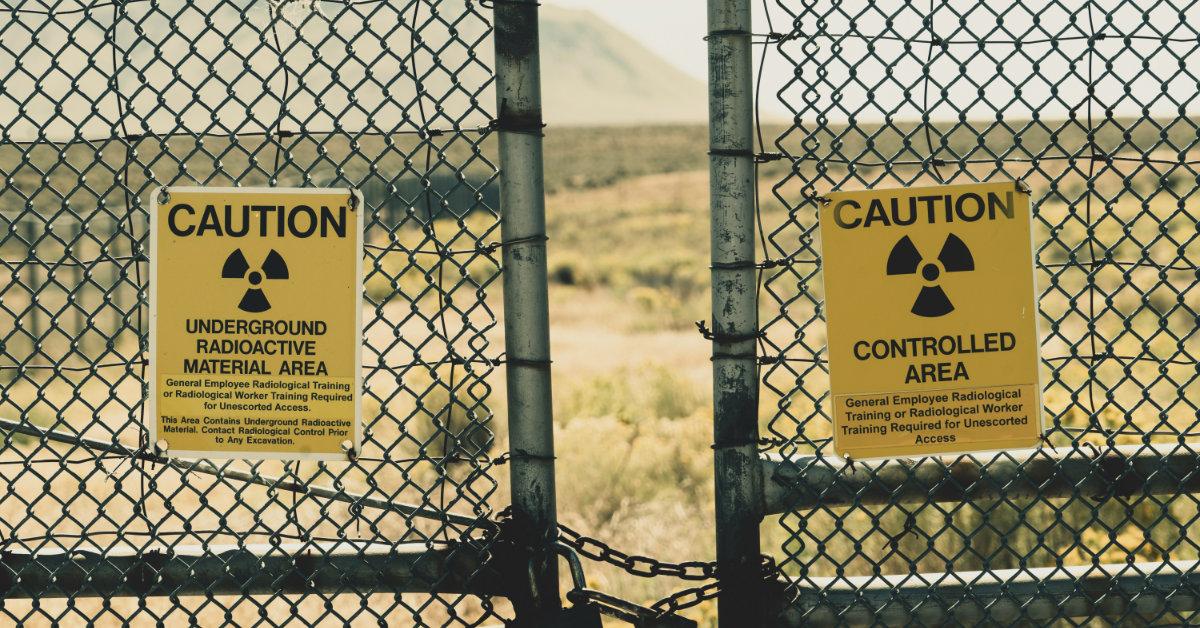
Now, before you start picturing glowing phones and Geiger counters, let’s address the elephant in the room: radiation. Thankfully, this isn’t some doomsday device. Carbon-14 emits beta particles, which are easily contained with a thin sheet of aluminum. It’s less harmful than the gamma rays spewed out by uranium, making it a surprisingly safe (and frankly, elegant) solution.
The team’s breakthrough isn’t just using carbon-14, it’s how they’re using it. They’ve engineered a dye-sensitized betavoltaic cell, layering carbon-14 on both the anode and cathode. This isn’t your grandpa’s nuclear battery. They’ve boosted energy conversion efficiency from a pathetic 0.48% to a respectable 2.86% – a nearly sixfold improvement! It’s still lagging behind Li-ion’s 90%, but let’s be real, we’re talking about a power source that could outlive your great-great-great-grandchildren.
The implications are staggering. Pacemakers that last a lifetime. Remote sensors that operate for decades without maintenance. Satellites that never need a recharge. And yes, even smartphones that finally break free from the tyranny of the charging cable.
Which, naturally, has Apple already hard at work. Forget Lightning cables, they’re pivoting directly to proprietary nuclear charging. Sources say the next iPhone will require a “NuCore” charging station – a sleek, minimalist box that houses a carefully calibrated micro-reactor. It’ll cost $499, and naturally, be incompatible with any other device. They’re calling it “seamless integration with the Apple Energy Ecosystem.” You’ll need a separate license to use anything beyond a 5-watt charge, and good luck finding a repair shop that’s qualified to handle a containment breach. Honestly, at this point, I’m half expecting Tim Cook to announce a partnership with the NRC.
Anyway, professor In envisions a future where nuclear energy isn’t confined to massive power plants, but integrated into the very fabric of our daily lives. It’s a bold vision, and one that, frankly, makes a whole lot of sense.
So, go ahead and keep buying those portable power banks. But just remember, while you’re frantically searching for an outlet, scientists are quietly building a future powered by the slow, inevitable decay of… well, everything.
The Tech Cynic – Signing off to pre-order the NuCore.

Leave a Comment
Leave a Comment